
Lootborne Forge and Dismantling: What to Do With Duplicates
The forge turns spare Lootborne gear into higher rarities, dismantling turns it into Bloodmarks. Here is the four-step rule for deciding between them.
Spare gear in Lootborne goes one of two ways, and both use the same pile of candidates. The forge gambles duplicates upward into a higher rarity. Dismantling converts them into Bloodmarks, which buy perks and potions.
Most players default to one of those two and use it for everything. The better habit is a short decision rule, because the two systems compete for the same items.
What the forge panel actually shows
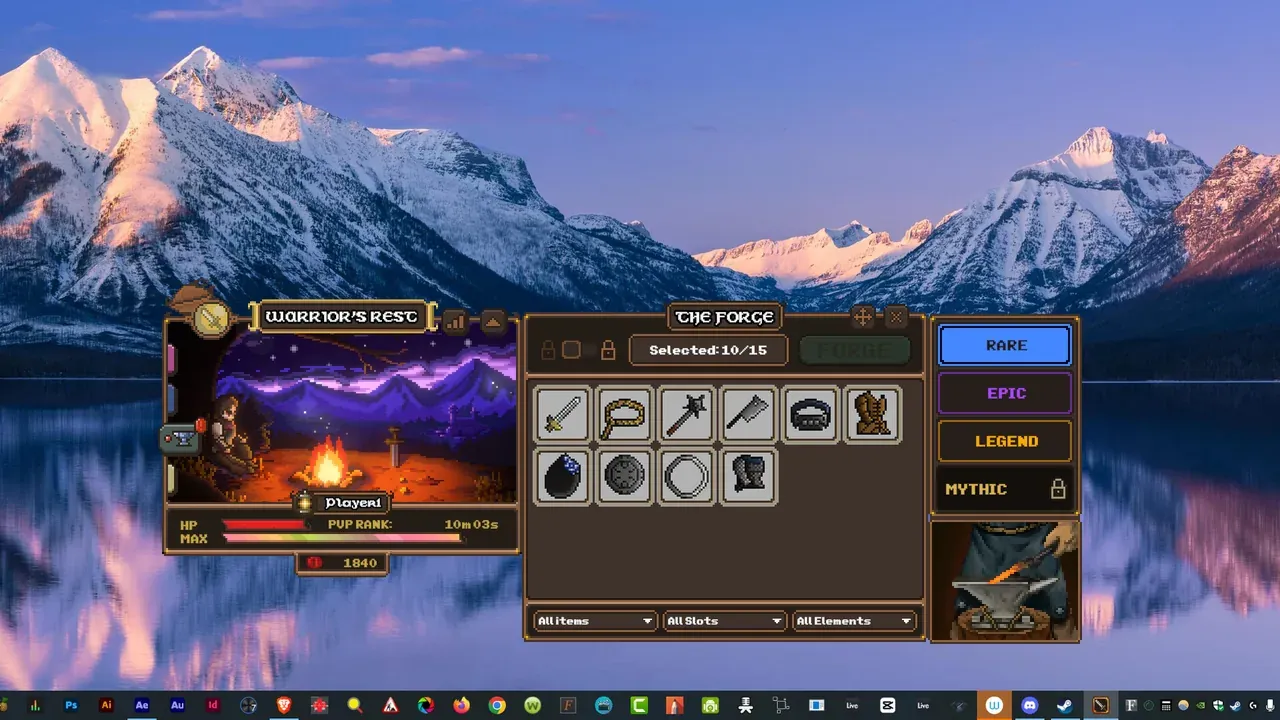
The forge opens as its own panel next to the camp screen, titled THE FORGE. In the official screenshots it contains:
- A grid of item slots with a selection counter, shown as
Selected: 10/15. - A column of rarity buttons labelled RARE, EPIC, LEGEND and MYTHIC, some of them carrying a padlock.
- Three filter dropdowns along the bottom: All items, All Slots and All Elements.
- A confirm button labelled FORGE.
The padlocks are worth noticing. They tell you the forge cannot produce every rarity from day one, and that higher tiers unlock later. If a rarity button is locked, no amount of spare gear will open it.
The exact recipes, the success rate and how the output rarity is decided are not documented officially. Be sceptical of anyone quoting precise odds.
Dismantling is the perk supply line
The inventory has two tabs, a main tab and a bin tab, plus a Sort by: Recent control and the same three filters. Moving items to the bin dismantles them.
That output is Bloodmarks, and Bloodmarks are the only way to buy perks. So every item you dismantle is a fraction of a perk. In testing, a common item returned about one Bloodmark.
This is why the two systems compete. An item thrown into the forge is an item that is not paying for your next perk, and perks change a run far more reliably than a random rarity upgrade does.
Some tiers cannot be traded, and that changes the maths
The official store page sets out the Steam Market rules, and they are worth knowing before you destroy anything.
- The Steam Market opens one week after release.
- Rare, Epic, and Legendary items dropped in battle can be traded with other players.
- Common, Mythic and Ascended items are bound to your account. So are Legendary items produced by the forge.
- Trading unlocks at level 15 on an account that is at least 7 days old.
- You can mark up to 25 items as sellable per week, with a maximum of 8 per day.
The distinction between a dropped Legendary and a forged one is the important part. If you forge a Legendary, you have converted a tradable-tier item into an account-bound one.
The four-step rule for any spare item
- Does it support an element preset you might run? Keep it. The preset panel has separate named loadouts per element, and an item that looks weak under one element can be central under another.
- Is its rarity tradable, and is it a battle drop? If yes, consider the Steam Market instead of destroying it.
- Do you need Bloodmarks right now? Dismantle. This is the most reliable return on a spare item.
- Only if you specifically want a rarity upgrade, forge it. Accept that the result is random and that a forged Legendary becomes account-bound.
Sorting items by recent first is a reasonable way to find the duplicates you just picked up, since those are the ones most likely to be surplus.
Why “forge everything” goes wrong
Two reasons, and both cost real progress.
The first is that perks are the strongest early investment in the game, and every item you forge is an item you did not dismantle. The second is the account-bound rule: you can turn sellable gear into unsellable gear without noticing.
Neither problem is fatal. The currency comes back and the items keep dropping. But the pattern is easy to correct once you know it, and it saves a few hours of grinding.
Related reading
- Items and their rarities for which tiers are tradable.
- Items and stats for how to judge a forged result.
- Perks and Bloodmarks for where the dismantled currency goes.
Sources and limits
The forge panel layout, selection counter and rarity buttons come from official Steam screenshots and the official store demonstration clip. The Steam Market rules and account-bound tiers come from the official Steam store page. Dismantle returns and the forge unlock point come from a hands-on write-up by Tpose Gaming and are credited as observations rather than official rates.
Related reading
items
Lootborne Items: How to Read a Stat Block and Pick Gear
Lootborne has 424 items across six rarities and five elements. Learn what each line in a tooltip means and how to compare two items properly.
items
Lootborne Item Rarities: Which Tiers Can You Trade?
Lootborne has six item rarities. Rare, Epic and battle-dropped Legendary items are tradable on the Steam Market; Common, Mythic and Ascended are account-bound.
guide
Lootborne Beginner Guide: What to Do in Your First Hours
Clear the 30 stages of Outskirts, unlock Auto Fight, and learn what resting and dying do to your run in Lootborne. A practical opening plan.